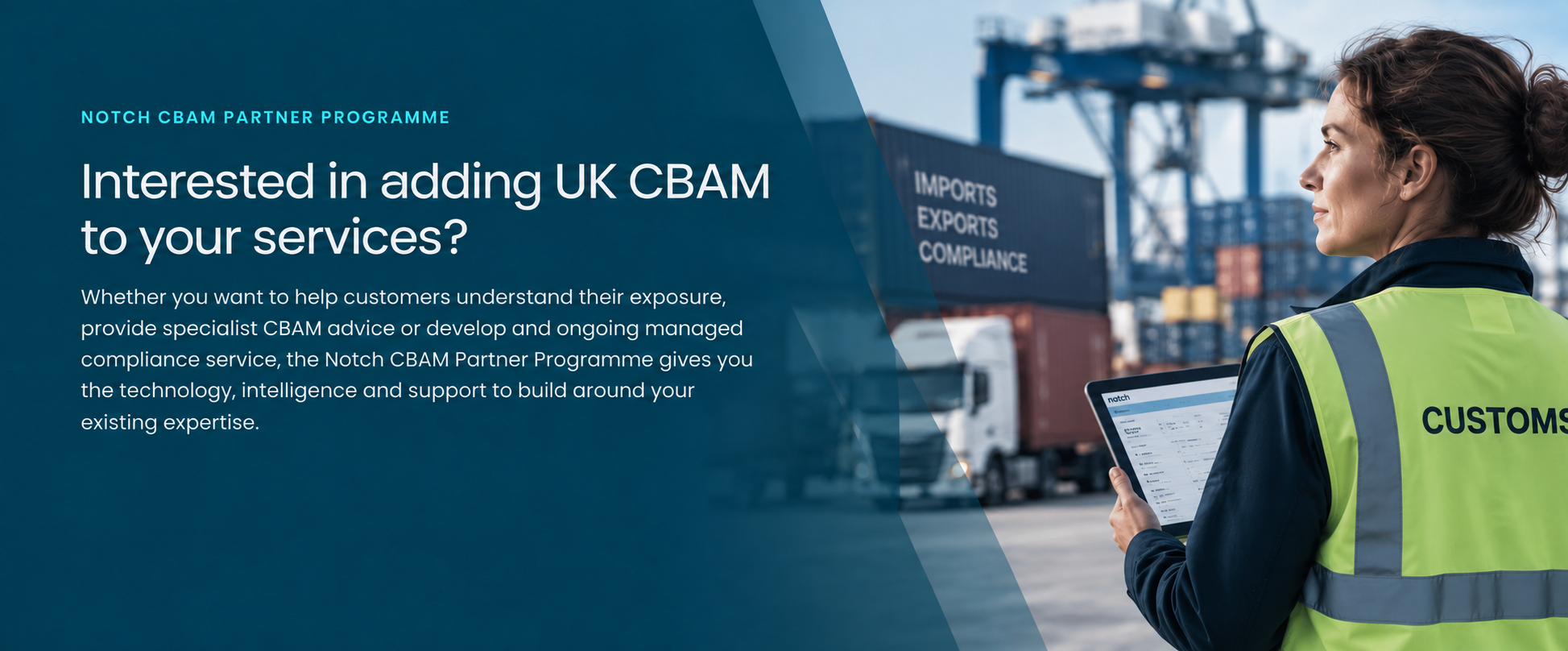
FOR CUSTOMS & INTERNATIONAL TRADE SPECIALISTS
Build your UK CBAM service with Notch.
UK CBAM creates a new opportunity to extend the support you already provide to importers.
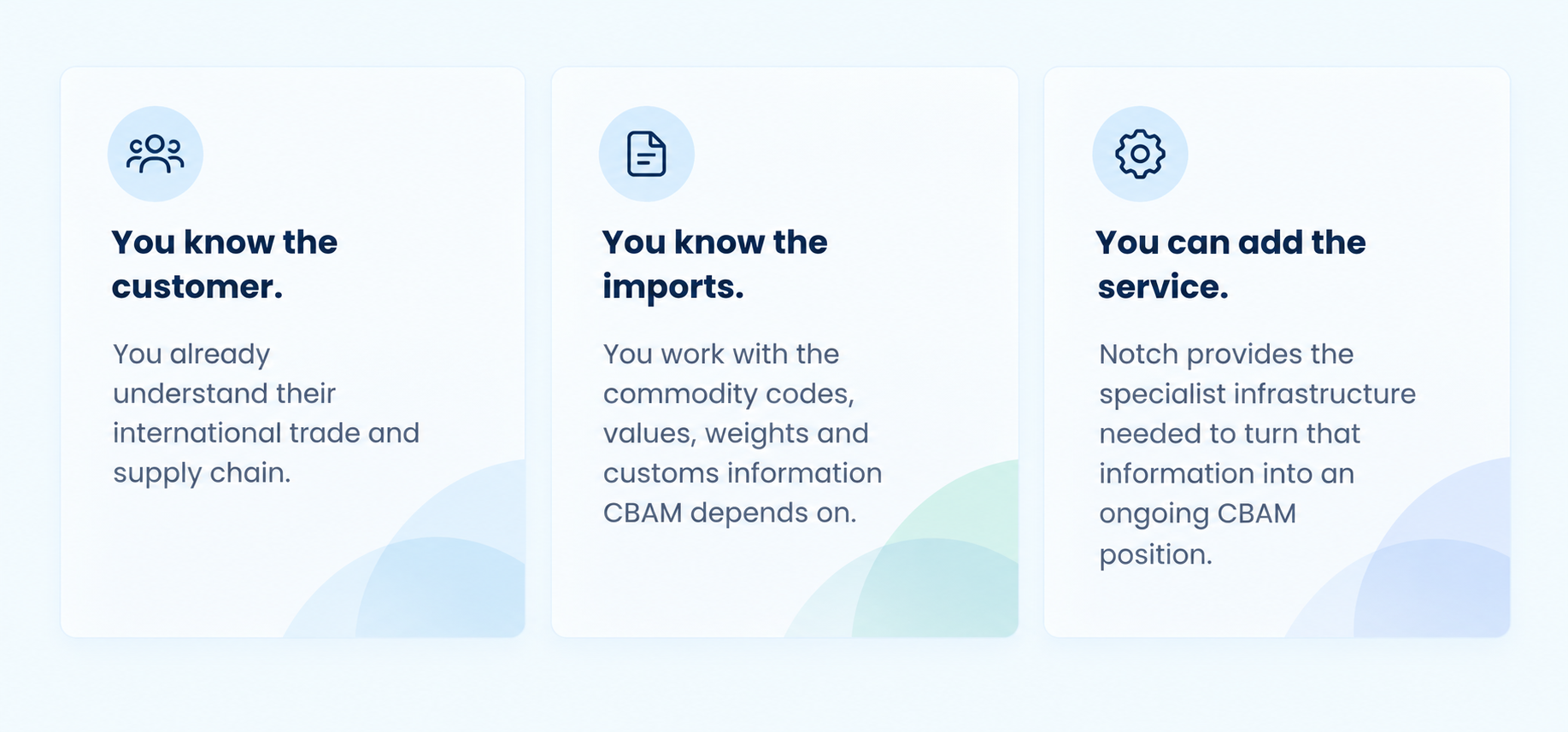
You have the customer relationships, You understand their imports. You already work with the customs data that sits at the heart of their CBAM position.
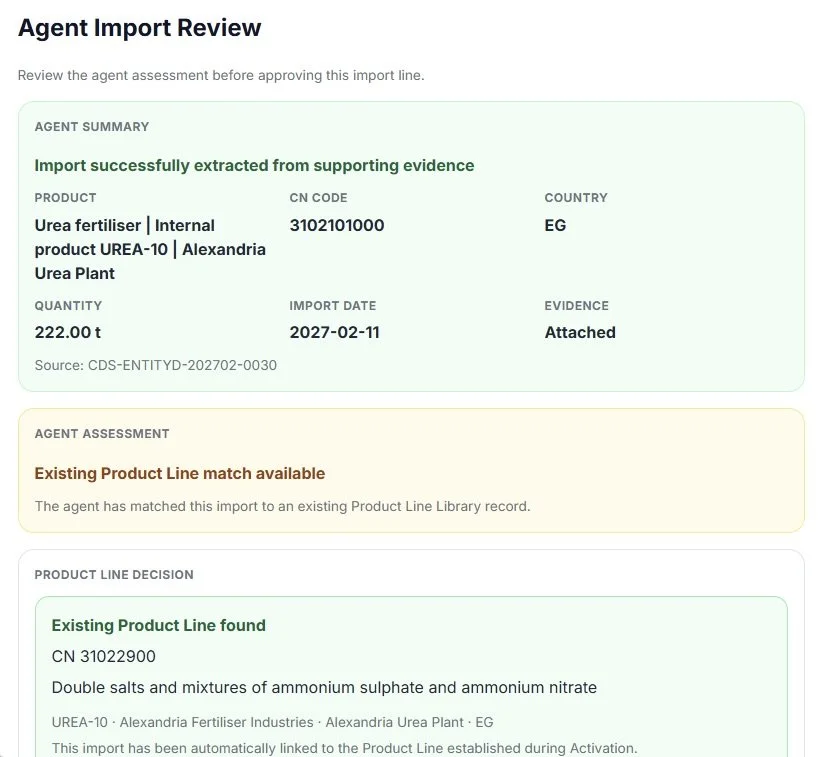
Notch gives you the technology and intelligence to turn that into a scalable UK CBAM service.
THE OPPORTUNITY
CBAM extends the customs conversation.
From 1st January 2027, UK CBAM introduces a new tax and compliance requirement for importers of qualifying aluminium, cement, fertiliser, hydrogen, iron and steel products.
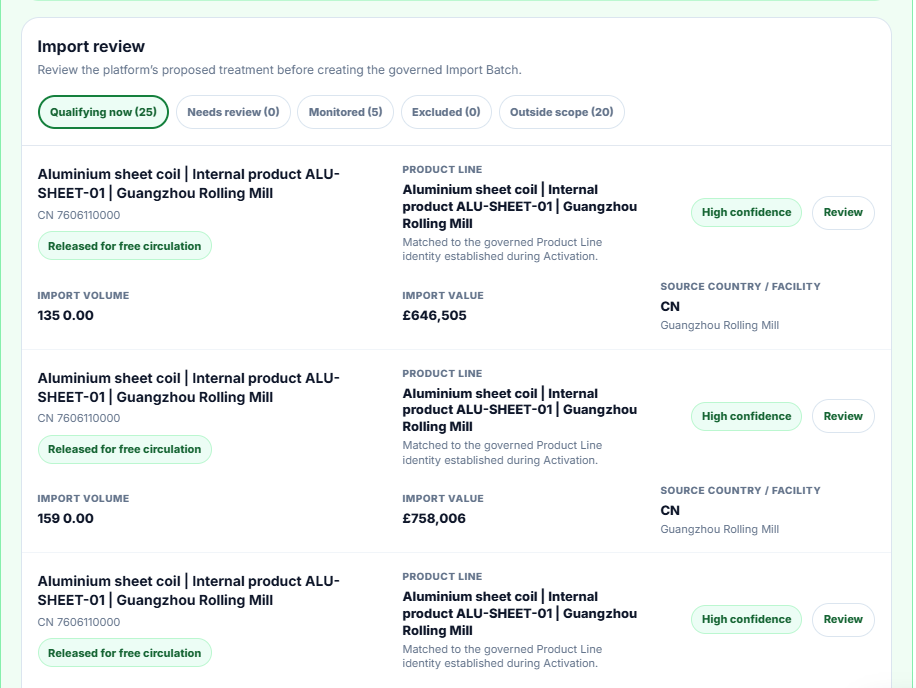
The importer remains the liable person, even where a customs broker or freight forwarder makes declarations on their behalf. But those importers will need help understanding which imports are affected, monitoring the £50,000 registration threshold, managing emissions information, forecasting financial exposure and preparing for reporting.
For customs specialists, that creates an opportunity to extend the relationship beyond the declaration itself.
WHAT DOES UK CBAM MEAN FOR CUSTOMS AGENTS?
A new opportunity to support your customers.
A short introduction to the opportunity UK CBAM creates for customs agents, brokers and international trade advisors, and how Notch can provide the technology behind your service.
YOUR CBAM SERVICE
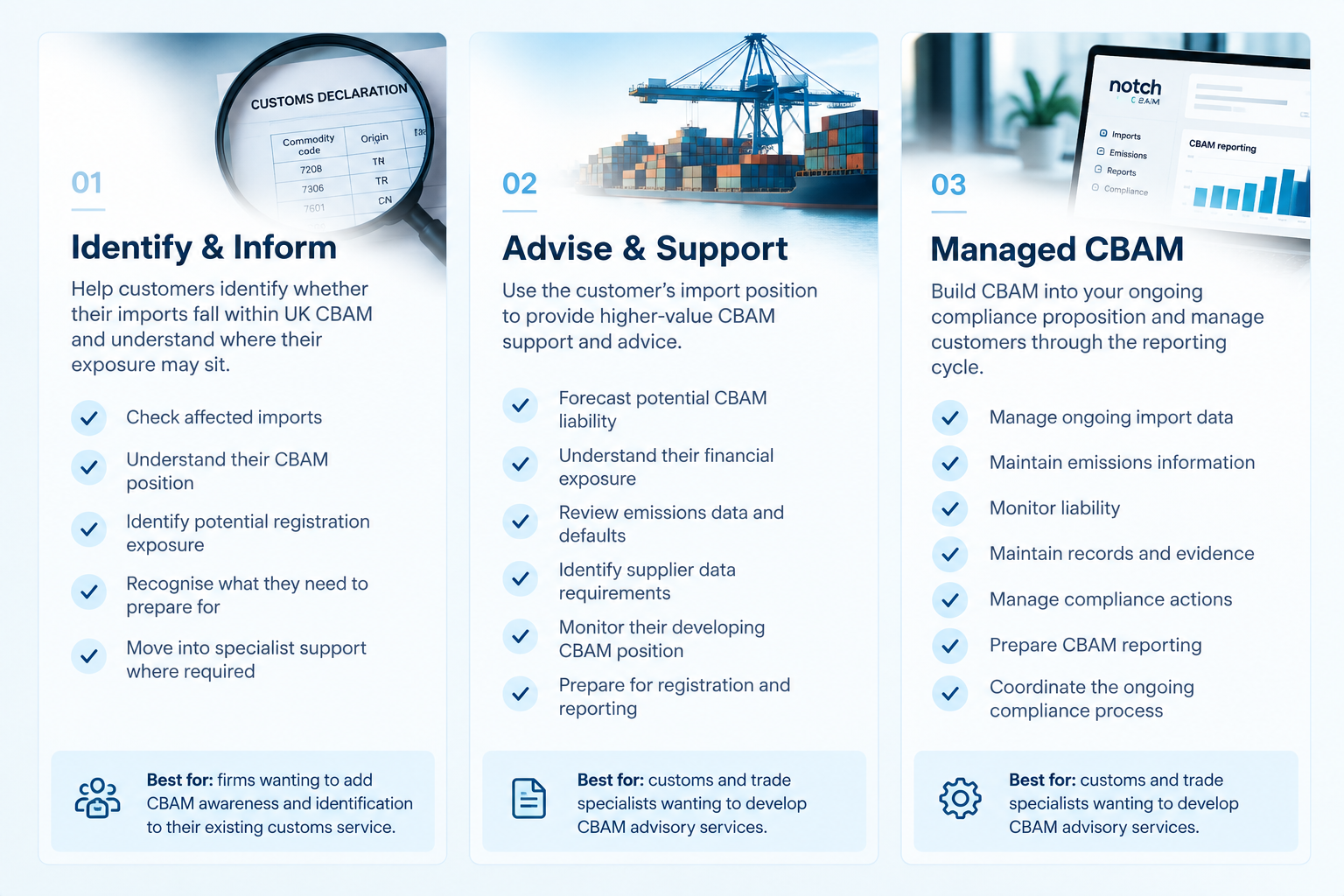
How far do you want to take it?
Not every customs business needs to provide the same level of CBAM support. Notch allows you to build the proposition that fits your expertise, customer relationships and commercial model.
POWERED BY NOTCH
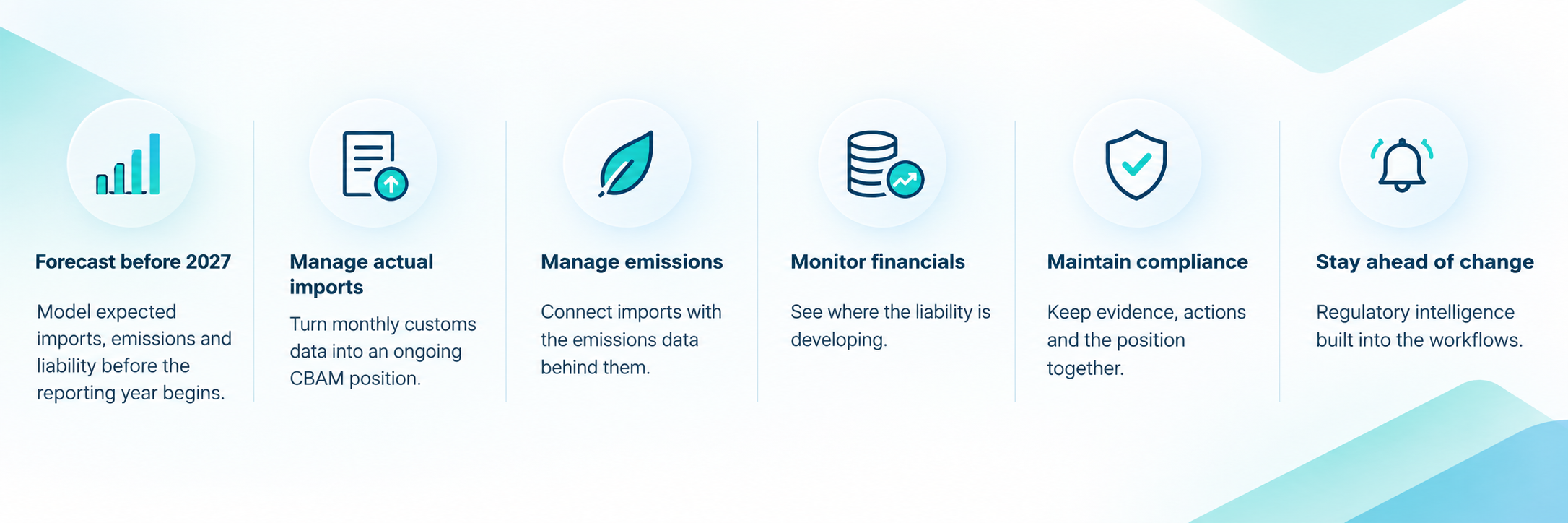
Build the service. Not the infrastructure.
Developing a CBAM service shouldn’t mean building your own software, emissions engine, data-management processes, infrastructure and regulatory monitoring capability.
INSIGHTS

UK CBAM and the changing role of the customs agent.
UK CBAM - CUSTOMS & INTERNATIONAL TRADE - 8 MIN READ
UK CBAM creates a new responsibility for importers, but it also raises an important question for the customs profession: where does the role of the customs agent end?
Customs specialists already sit close to the data CBAM depends on and, in many cases, have long-standing relationships with the importers affected.
We look at the role customs specialists could play, the different service models emerging and how technology could make providing ongoing CBAM support practical at scale.